
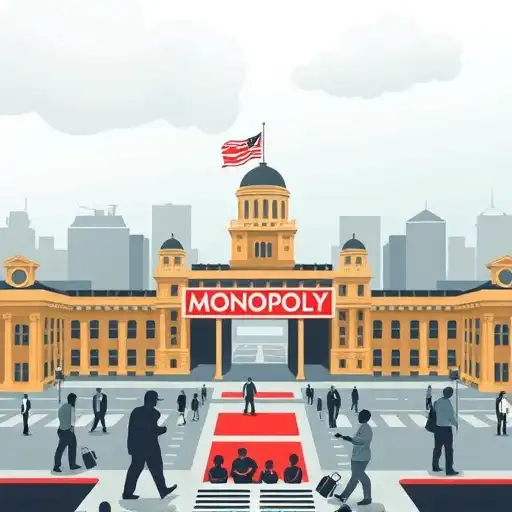
Whistle PG: Cassino premiado com pagamentos rápidos | Exploring the Complexities of Monopoly and the Rise of Whistle PG: Cassino premiado com pagamentos rápidos
Dive into the intricacies of monopolies and the role of platforms like Whistle PG in changing the dynamic of fast rewards in the gambling industry. de Whistle PG: Cassino premiado com pagamentos rápidos
Understanding Monopoly: A Deep Dive into Economic Giants
Monopolies have always been at the core of economic discussions, often illustrating the delicate balance between corporate power and regulation. Originating from the Greek word ‘monos’ meaning ‘single’ and ‘polein’ meaning ‘to sell’, monopoly refers to the dominance of a single company or group in an industry, eliminating or significantly reducing competition.
The Historical Context of Monopoly
Monopolies have existed since ancient times. The earliest recorded monopolies were held by the governments themselves or were granted to organizations by the government. For instance, the infamous British East India Company held a trade monopoly with India during the colonial era.
As industrialization expanded, so did the prevalence and complexity of monopolies. Major U.S. entities like Standard Oil, owned by John D. Rockefeller, controlled vast swaths of the oil industry, prompting legislative actions such as the Sherman Antitrust Act of 1890. This act aimed to curb concentrations of power that interfere with trade and reduce economic competition.
The Characteristics of a Monopoly
Several key characteristics define a monopoly: a single seller dominating the market, no close substitutes for the product or service provided, and high barriers to entry for potential competitors. These barriers can include significant start-up costs, access to technology, control of crucial resources, and government regulations favoring the monopolistic entity.
When these characteristics converge, consumers often suffer from higher prices and reduced innovation as the lack of competitive pressure fails to incentivize improvement or cost reduction.
The Digital Age: New Monopolies in a New Landscape
With the advent of the digital age, monopolistic practices have evolved, manifesting in technology sectors where companies like Google, Apple, and Amazon dominate. These modern monopolies leverage control over information, platforms, and marketplaces.
Such dominance leads to ethical debates concerning data privacy, pricing strategies, and influence over smaller players. Governments struggle to regulate these entities effectively as their global reach and economic contributions make decisions complex.
Monopoly's Impact on the Gaming Industry
The gaming industry, both traditional and digital, frequently sees monopolistic tendencies. Favoritism from regulators and technological advantages can quickly transform successful companies into dominant forces. However, the market's flexibility also allows for disruptors to challenge these entities, shifting dynamics in unpredictable ways.
An illustrative example within this context is the emergence of Whistle PG, a cassino premiado com pagamentos rápidos. The rapid rise of such platforms is changing how players perceive rewards and engagement, acting as a counterbalance to larger, slower conglomerates.
Whistle PG: A Game-Changer in the Gambling Arena
Whistle PG's esteemed position in the gambling sector is credited to its emphasis on delivering rapid payments, catering to a market craving immediate gratification. While traditional casinos focus on lavish experiences, Whistle PG offers practical advantages.
Fast Payments as a Competitive Edge
Speedy transactions are an underappreciated component distinguishing platforms in a saturated market. Whistle PG has capitalized on this aspect, ensuring that players receive their winnings promptly, thus enhancing trust and loyalty in an industry that often faces skepticism.
This approach aligns with evolving consumer preferences towards digital platforms that prioritize user experience and efficiency over grandeur.
Regulation and Whistle PG's Growth
Despite the advantage of rapid payments, Whistle PG operates under stringent regulations designed to prevent anti-competitive practices. Balancing quick service with regulatory compliance requires innovation and strategic alignment.
As Whistle PG navigates this landscape, it simultaneously challenges larger entities, fostering a more competitive environment within the gambling industry. This dichotomy reflects a larger global trend wherein smaller, agile companies disrupt monopolistic forces with focused innovation.
The Future of Monopoly and Market Dynamics
The tension between monopolistic expansion and disruptive entities like Whistle PG exemplifies ongoing market dynamics. As industries evolve, regulatory frameworks must adapt. Policymakers face the task of curbing excessive dominance while permitting innovation that benefits consumers.
Ultimately, understanding monopolies requires a multifaceted approach, considering historical contexts, emerging technologies, and consumer needs. As Whistle PG exemplifies, even well-entrenched industries can undergo transformation, offering lessons for both businesses and regulators in achieving balanced market ecosystems.
